

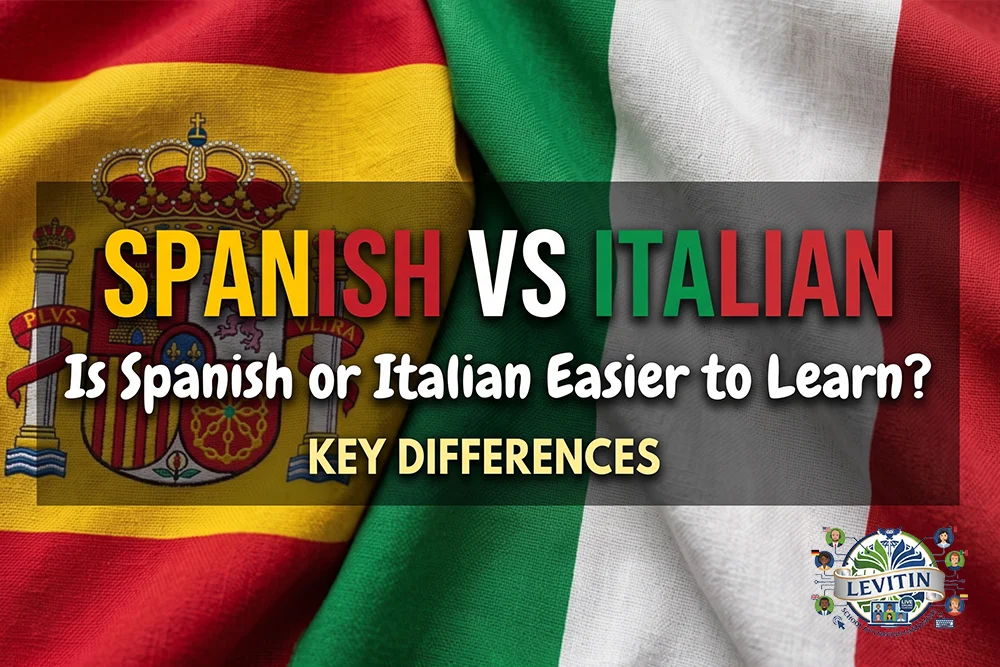
A student asked me this exact question last week, sitting in front of two open tabs – one for a Spanish course, one for Italian – completely stuck. Is Spanish or Italian easier to learn? It’s a fair question, and it comes up constantly at Language Learnings, but the honest answer is that “easier” depends heavily on what you’re bringing to the table and what you actually want out of it. Both languages grew out of Latin. Both have huge, warm-hearted communities of speakers. And both will absolutely wreck your Duolingo streak if you’re not careful. Where they actually diverge is in the details – the grammar quirks, the way words sound, the resources sitting around waiting to be used. That’s what this post digs into.
Where Spanish and Italian Actually Come From
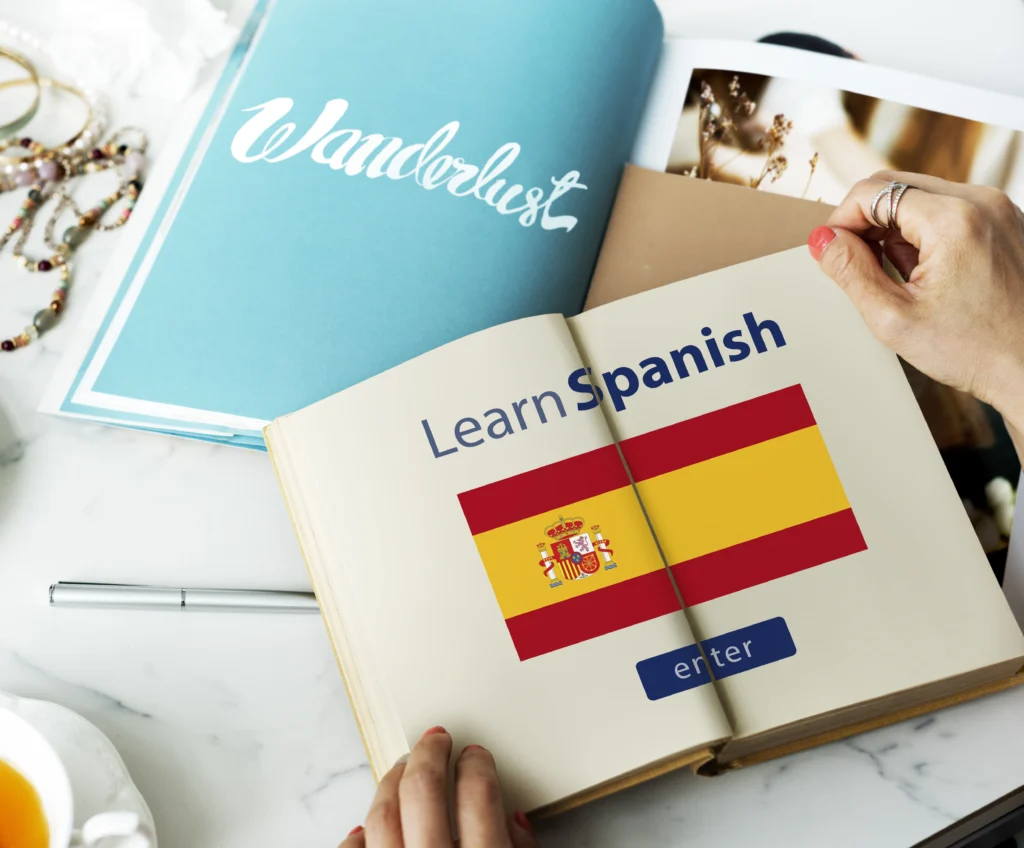
Spanish and Italian both descend from Latin, and that shared ancestry shows up everywhere once you start paying attention – similar verb endings, nouns that carry gender, that rolling rhythm both languages share. Learn one and the second gets noticeably easier, mostly because your brain has already built the scaffolding for how Romance languages tend to work.
But they didn’t stay identical twins. Spanish spread across more than twenty countries, picking up vocabulary from Indigenous languages throughout Latin America along the way, plus a heavy dose of Arabic left over from centuries of Moorish rule in Spain. Italian mostly stayed home. It didn’t travel the way Spanish did, and as a result it kept a tighter grip on its Latin roots – close enough that a lot of linguists still call it the Romance language nearest to Latin itself.
Spanish vs Italian Pronunciation: The One Where Italian Usually Wins
Ask ten language teachers which is easier to pronounce and most will say Italian, and there’s a real reason for that. Once you learn how a letter sounds in Italian, it keeps sounding that way – no surprises three chapters later. Double consonants like “nn” or “tt” just mean you hold the sound a beat longer, which takes a little ear training but isn’t hard to pick up.
Spanish is phonetic too, for what it’s worth, but it carries more regional texture. The “th” sound used in parts of Spain doesn’t show up the same way in Mexico or Argentina. The letter combination “ll” gets pronounced completely differently depending on where the speaker grew up. And then there’s the rolled “rr,” which frustrates a lot of English speakers for weeks before it finally clicks.
Neither language comes close to the pronunciation demands of French or Mandarin, to be clear. But if sounding confident matters to you early on, Italian tends to get you there faster.
Which Is Easier, Spanish or Italian, for Grammar?
This is usually where the “which is easier Spanish or Italian” question gets a real answer, and most of the time that answer is Spanish – at least for absolute beginners. Not because Italian grammar is some nightmare, but because Spanish has decades’ worth of textbooks, apps, and structured courses built around it. The path is already paved.
Italian, on the other hand, throws a few extra curveballs early. Irregular verbs show up more often in casual conversation than they do in Spanish. Definite articles shift depending on the first letter of the word that follows – il, lo, l’, i, gli, le – which is a layer Spanish simply doesn’t ask of you. Italians reach for the subjunctive mood in everyday speech far more casually than Spanish speakers tend to, who can often lean on the indicative for quite a while before it becomes unavoidable.
That said, Spanish isn’t without its own headaches. Try explaining “vos” to someone who’s only ever studied Spanish through an app built around Mexican usage, then watch their face the first time they hear it in Buenos Aires.
Spanish vs Italian Vocabulary: More Overlap Than You'd Think

Here’s the part that should make this whole decision feel less stressful: both languages give English speakers a head start. Spanish and Italian each pull heavily from Latin, and so does English, which means words like “información” and “informazione,” or “importante” in both, or “possible” and “possibile,” barely need memorizing. You already half-know them.
Roughly 80% of common vocabulary overlaps between the two in some recognizable form. Italian tends to sound a touch more formal and literary in everyday speech, while Spanish vocabulary shifts more from country to country and leans a little more casual overall. Watch out for false friends in both directions, though – words that look nearly identical but mean something else entirely. Not every lookalike is a shortcut.
Spanish or Italian: Which Is Actually Easier for English Speakers?
The U.S. Foreign Service Institute, the people responsible for training American diplomats, ranks languages by how long they typically take native English speakers to learn. Both Spanish and Italian land in its easiest tier, with an estimate of roughly 600 to 750 hours to reach professional proficiency. On paper, it’s basically a coin flip.
Real life tips things slightly, though – not because of grammar, but because of exposure. Spanish comes with a deeper well of resources: more shows, more music, more apps, and usually more people nearby to actually practice with if you’re in an English-speaking country. Italian has less content floating around, though what exists – opera, classic film, regional dialects – rewards the learners who stick with it. And if you happen to live somewhere with a sizable Spanish-speaking community, your immersion opportunities lean toward Spanish whether you plan for it or not.
So when people compare Spanish vs Italian purely on grammatical difficulty, it’s close enough to call even. Factor in how easy it is to actually use what you’re learning day to day, and Spanish usually edges ahead – mostly because there’s just more of it around you.
So, Which Should You Pick?
Forget “objectively easier” for a second and ask yourself a few things instead. Where will you actually use this? If you’re heading to Spain or Latin America, or you’ve already got Spanish speakers in your life, Spanish pays off faster. What’s pulling you toward one over the other in the first place – is it Italian food, film, art, a grandparent who spoke it? That kind of motivation carries you through the slow weeks far better than a grammar comparison ever will. How do you like learning things – do predictable rules keep you motivated, or does flexibility matter more to you than consistency? And do you already have a head start, some words picked up from travel or music or family, that you could lean into rather than starting cold?
There’s no wrong answer buried in any of this. The students who end up conversational aren’t the ones who picked the “easier” language – they’re the ones who kept showing up.
How Language Learnings Fits Into This Decision
At Language Learnings, we spend real time helping students figure out which language actually fits before they commit months to studying it. Our tutors work with Spanish and Italian learners at every level, and lessons get shaped around your interests, your pace, and how you personally hold onto new words – not a one-size-fits-all script.
Whether it’s the reach of Spanish or the rhythm of Italian pulling at you, working with a tutor gets you speaking sooner than grinding through an app on your own ever will. You get real conversation, correction in the moment, and a plan that adjusts as you actually improve.
Final Thoughts
So – is Spanish or Italian easier to learn? Spanish tends to be a bit more forgiving grammatically and comes with a deeper pool of resources, especially if you’re already surrounded by English. Italian pays you back with cleaner, more predictable pronunciation and a structure that rewards patience once you get past the early hurdles. Neither is genuinely hard compared to most other languages, and both respond well to consistent effort.
Pick whichever one actually makes you want to open the book again tomorrow. That’s the real deciding factor, not the grammar chart.Contact Us.
FAQs
Spanish usually edges out Italian for absolute beginners, mostly because of consistent grammar rules and a much bigger pool of resources. Italian isn’t far behind at all, especially for learners who pick up pronunciation quickly.
Italian wins this one. Its pronunciation stays consistent once you learn the basics, while Spanish shifts a bit depending on the region you’re listening to.
It’s got a few extra layers – shifting definite articles, more frequent use of the subjunctive in casual speech – that can feel demanding early on, though nothing unmanageable with steady practice.
Generally, yes. The overlap in cognates and grammar means Spanish speakers tend to pick up Italian faster than someone starting from scratch.
Spanish tends to have broader practical value simply because of how many people speak it across Latin America, Spain, and parts of the U.S. Italian still holds real value, particularly for travel and industries like design, food, and fashion.
Yes. A tutor can look at your goals, how you learn best, and whatever language background you already have, then help you pick the one you’re actually likely to stick with long-term.