

Skimming vocabulary lists won’t get you speaking German quickly. Neither will trying to absorb every grammar rule in a single sitting. What actually works is a system that combines structure, real speaking practice, honest feedback, and steady contact with the language – not any one shortcut on its own.
That’s really what separates a good course from a mediocre one. A well-built program helps you sidestep the mistakes most beginners make, introduces vocabulary in an order that makes sense, and tends to get you talking sooner than studying alone would.
German has a reputation for being intimidating, and it’s easy to see why. Noun genders, cases, unusual word order, compound words that stretch across half a sentence – all of it can make beginners think they need months of grammar study before attempting a real conversation.
That’s rarely true. Progress usually comes faster when grammar is taught next to actual communication, not as its own separate subject. Whether y1`ou’re learning for travel, university, work, a move abroad, or an exam, staying actively engaged with the language from day one tends to be the more effective path. This is also an important factor to consider when looking for the Best online german language course, as the right program should balance structured learning with practical communication.
This is roughly the philosophy behind Language Learnings’ German program. Instead of treating grammar drills and real conversation as two separate tracks, lessons weave them together – private instruction, group conversation classes, and a structured path running from A1 through C2, with tutors covering speaking, grammar, and writing from the first session onward.
What Makes a German Course Online Effective?

Not every course that advertises “fast results” actually delivers on it. Some load learners up with exercises and give almost no speaking time. Others spend most of the lesson on grammar explanations without ever showing how those rules play out in a real conversation.
A course worth your time usually develops several skills at once:
- Understanding spoken German
- Responding without silently translating in your head first
- Building sentences out of patterns you already know
- Pronouncing words clearly
- Applying grammar in situations that actually come up
- Gradually reading and writing everyday German with more confidence
These skills reinforce each other. Vocabulary is easier to remember once you’ve used it in a real sentence. Grammar makes more sense after you’ve heard it a few times in context. And pronunciation tends to improve faster when a mistake gets corrected early, before it settles in as a habit.
Start With a Clear Goal
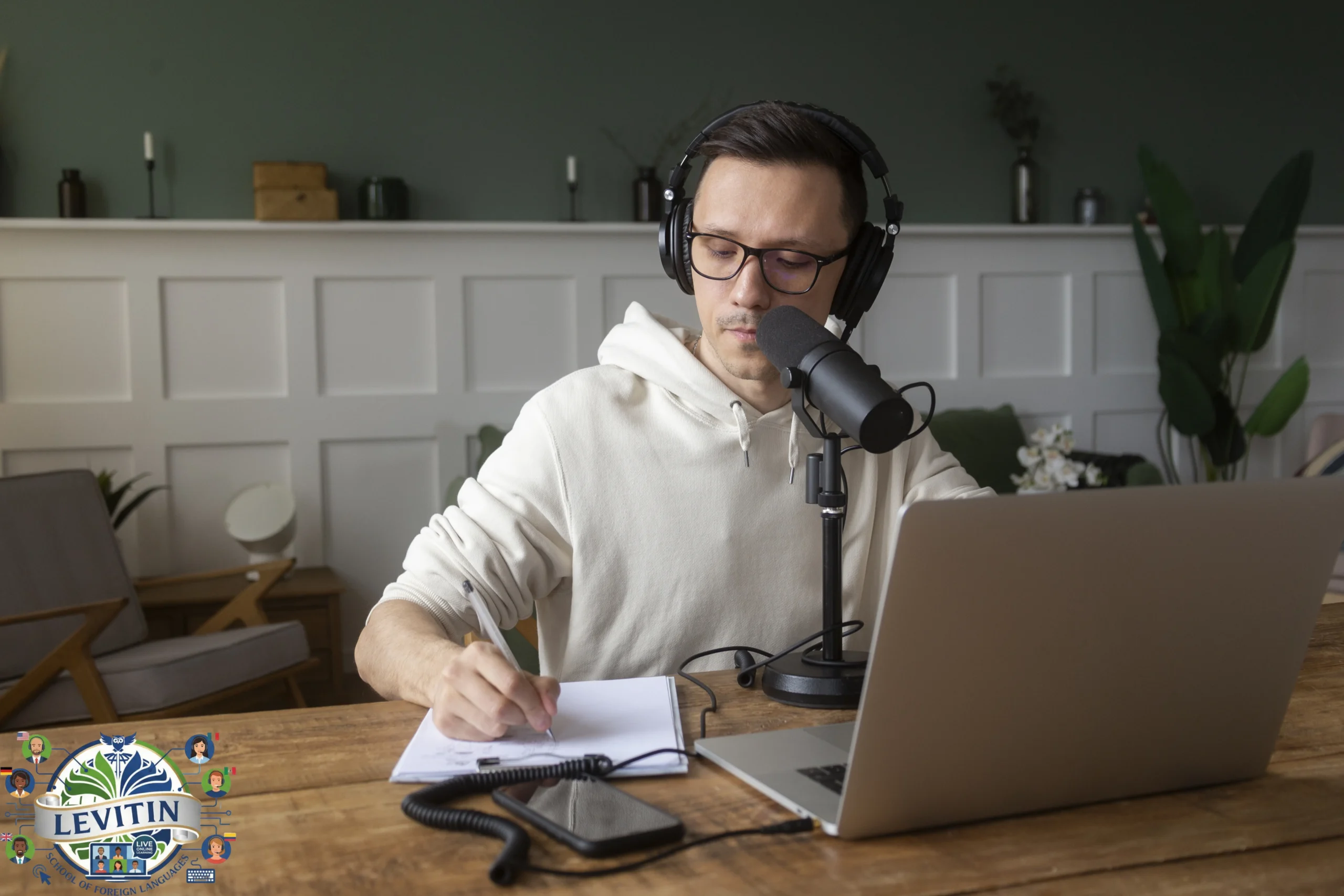
Before you start comparing courses, figure out what “fast” actually means for you. Someone studying for a Goethe exam has a different set of priorities than someone brushing up before a business trip. If you’re considering online German lessons, it helps to first understand exactly what you want to achieve. Ask yourself a few honest questions: What do I actually need German for? What level am I aiming for? And realistically, how much time can I put in each week?
Goal | Focus On |
Travel | Speaking, directions, transport, restaurants, shopping |
Career | Workplace vocabulary, meetings, emails, calls |
Relocation | Appointments, housing, public services, daily life |
Exam prep | CEFR-based structure matching your exam |
Conversation | Speaking practice, correction, role-play |
Follow the CEFR Levels
Studying without any clear sequence is one of the easiest ways to waste time. The CEFR breaks proficiency into six levels:
A1 and A2 – Beginner: introducing yourself, ordering food, handling routine situations
B1 and B2 – Intermediate: giving opinions, explaining experiences, keeping up with longer conversations
C1 and C2 – Advanced: near-native comprehension and fluency across most situations
A good course moves you through those stages in order instead of throwing advanced grammar at you before you’re ready for it.
Why Live Online German Classes Speed Up Progress

Self-study apps and books can tell you that something is wrong, but rarely why. That’s where live online German classes make a real difference – a tutor can hear that your word order is off, that you’re mixing up der, die, and das, that you’re mispronouncing a sound, or translating too literally from English, and correct it on the spot. Catching a pronunciation issue in your first week is usually much easier than unlearning it three months later. Language Learnings builds its lessons around exactly this kind of correction, whether you’re in a private session or a group conversation class.
Private Online German Lessons or Group Classes?
Private lessons move at your pace and go straight for your weak spots. They’re worth considering if you’re preparing for an exam, relocating soon, working around an unpredictable schedule, or simply want as much speaking time as possible.
Group classes bring something private lessons can’t really replicate: other voices, unscripted questions, the chance to learn from someone else’s mistake instead of only your own. A lot of learners end up doing both – private lessons for structure, group sessions for extra conversation practice.
Start Talking Early to Learn German Online Faster
It’s tempting to wait until you “know enough” before speaking. Resist that urge – it usually slows you down more than it protects you. You don’t need a huge vocabulary to start; you need a handful of phrases you can use with confidence. Introducing yourself. Asking a question. Saying what you like or don’t. Describing your day. Asking for directions. Admitting you didn’t understand something.
Speaking early also tells you exactly what to work on next. The moment you try to describe what you did yesterday, the gaps become obvious – and because they’re tied to something you actually wanted to say, they tend to stick.
Building German Grammar One Step at a Time
German grammar makes sense once you see the logic behind it, but trying to absorb all of it at once isn’t realistic. A more workable sequence looks something like this: basic word order, present-tense verbs, question forms, articles and gender, the accusative case, modal verbs, separable verbs, past tense, the dative case, and only then the more complicated word order rules.
A well-structured German course online can make this process easier by introducing grammar step by step alongside practical exercises. Grammar sticks better when it shows up inside speaking and listening practice, not just on a chart you memorize once and never touch again.
Build Vocabulary Around Situations
Knowing 500 random words in isolation won’t help you order lunch. It’s far more useful to organize vocabulary around real situations – introductions, family, numbers and time, food, shopping, transport, home, work, travel, health. Learn words alongside the phrases you’d actually use them in. That context is what makes them easy to recall when you actually need them.
Choose a German Course Online With Real Speaking Time
Don’t judge a course purely on how many lessons it includes. Pay attention to what actually happens during those lessons instead. A 60-minute class where the teacher talks for 50 of those minutes is usually less useful than a shorter one where you’re speaking for half the time. Look for question-and-answer practice, role-play, pronunciation correction, and real-time feedback. A good lesson should leave you feeling like you used German – not just learned facts about it.
Practice Outside the Classroom
Lessons give you structure. Everyday exposure is what makes the language start to feel familiar. You don’t need advanced content right away – just material slightly above your current level. Beginner podcasts, videos with German subtitles, leveled readers, simplified news, language exchange chats – any of it helps. Hearing something in the wild after you’ve studied it in class tends to lock it into memory.
Track Progress by What You Can Do
Don’t measure your progress by how many chapters you’ve finished. Measure it by what you can actually do. After a few weeks, ask yourself honestly: Can I introduce myself without notes? Order food? Describe my day? Follow the gist of a beginner-level audio clip? These are better indicators than any completion percentage. If you’re finishing lessons but still can’t speak spontaneously, that’s usually a sign your practice needs more active speaking in it.
What to Check Before Choosing Online German Classes
A few things worth checking before you commit: a clearly tiered level system, qualified tutors, live speaking from the very first lesson, scheduling flexibility, both private and group formats, real progress feedback, practical everyday content alongside the grammar, exam support if you need it, and ideally a trial lesson before signing up long-term.
Language Learnings, for what it’s worth, offers German private lessons, group conversation classes, a structured CEFR path from A1 through C2, and tutor-led learning that treats communication, grammar, vocabulary, speaking, and writing as parts of the same process rather than separate boxes to check.
How Long Does It Take to Learn German Online?
There isn’t a single honest answer here – it depends on your background, your schedule, and how intensely you study. Instead of chasing a total timeline, it’s more useful to set smaller milestones: holding a two-minute conversation as a beginner, finishing A1, handling common travel situations, reaching A2, getting ready for a certification exam. Studying consistently with regular tutor support tends to outpace short bursts of intense studying followed by long gaps.
Join Language Learnings – The Best Way to Learn German Online

At Language Learnings by Tymur Levitin, the goal isn’t just to teach you German – it’s to help you actually use it. Whether you’re prepping for an international career, planning a move to Germany, or just chasing a long-standing personal goal, the platform is built around getting you speaking as soon as possible.
- Expert-Led Classes – Work with experienced tutors who guide you through each step
- Flexible Learning – Study at your own pace, whenever it suits you
- Real-Life Practice – Build fluency through conversation with native speakers
- Personalized Lessons – Get a plan shaped around your specific goals
Languages We Offer: Spanish, German, English, Polish, Italian
FAQs
Yes. Most beginner online German classes assume you know nothing at all. You’ll start with greetings, numbers, and simple expressions before grammar even enters the picture.
Depends on what you want. Private suits learners who want personal attention and more time speaking; group classes bring variety and unscripted practice. Plenty of people end up doing both.
No. Even ten minutes – reviewing vocabulary, listening to a short clip – is usually enough to keep the language from feeling unfamiliar again.
Real speaking time, useful corrections, and a sensible order to the lessons, rather than jumping straight into advanced grammar before you’re ready.
Yes, especially if the lessons are built around your specific exam – covering listening, reading, writing, and speaking together, alongside actual exam-style tasks.
Start learning today. Sign up for German classes at Language Learnings and take the first step toward fluency.