

Spanish is consistently ranked as one of the easiest languages for English speakers to learn. The Foreign Service Institute estimates roughly 600-750 class hours to reach professional proficiency, well under half the time needed for a Category III language like Russian (around 1,100 hours), and less than a third of what a Category IV language like Arabic typically requires (around 2,200 hours).
That’s the good news. The bad news is that most people still study it wrong, building vocabulary lists that look impressive on paper and disappear the moment they actually try to speak.
The problem usually isn’t motivation or even time. It’s a method. Cramming 50 new words a week through flashcards builds recognition; you’ll know a word when you see it, but not recall it, which is what you actually need to pull words out of memory mid-conversation. Those are two different cognitive skills, and most study routines only train one of them.
Here’s what actually moves the needle, and why.
Why Most Vocabulary-Building Methods Don’t Transfer to Speaking

- Recognition isn’t recall. Seeing “perro” and knowing it means “dog” is recognition. Needing to say “dog” and producing “perro” unprompted is a measurably harder cognitive task, and the one that actually matters in conversation.
- Isolated word lists lack context. A word memorised alone has no hooks to attach to. A word learned inside a sentence has grammar, tone, and meaning all reinforcing each other at once.
- Cramming beats spacing in the short term and loses badly in the long term. Research on spaced repetition consistently shows that reviewing a word at increasing intervals a day, then a few days, then a week, produces dramatically better long-term retention than reviewing it daily until a test, then dropping it.
- Passive exposure builds recognition slowly. Just listening or reading helps, but it usually fails to build recall without active retrieval practice mixed in.
How to Speak Spanish: The Study Method That Actually Builds Vocabulary

Most vocabulary advice stops at “review more often,” which isn’t wrong, just incomplete. The method below covers what to actually do with that review time so it sticks.
- Learn Words in Phrases, Not Isolation: Instead of memorising “rápido” as a flashcard, learn “lo más rápido posible” (as fast as possible) as a chunk. The word arrives already wired into a usable pattern, which means it surfaces in speech the way it’ll actually be used, not as an isolated vocabulary fact.
- Use Active Recall, Not Passive Review: Looking at a word and its translation side by side is review. Covering the translation and forcing yourself to produce it is recall, and recall is the skill that transfers to real conversation. The format matters more than the time spent.
- Apply Spaced Repetition Deliberately: Review new words after 1 day, then 3 days, then 7 days, then 2–3 weeks. Words that come back to mind easily get pushed further out; words that don’t get reviewed sooner. This is the principle behind most flashcard apps’ “smart” algorithms, but it works just as well with a notebook and a calendar reminder.
- Speak the Words Out Loud Before They’re “Ready”: Most learners wait until they feel confident using a new word in conversation. That confidence actually comes after repeated, sometimes awkward use, not before it. Using a half-learned word in an actual sentence, even imperfectly, cements it faster than another week of silent review.
- Anchor Abstract Words to Concrete Images or Stories: Concrete nouns (mesa, perro, libro) are easy to map to a picture. Abstract words (sin embargo, a pesar de, de hecho) are harder because there’s nothing to visualise. Attaching a small mental story or a specific, memorable example sentence to abstract vocabulary gives the brain something to hook onto besides the translation alone.
How Many New Words Should You Actually Study Per Week?
There’s a figure that gets cited a lot: the roughly 1,000-1,500 most frequent words cover around 80% of spoken Spanish. In general, it’s better to have depth in a small set of high-frequency vocabulary than breadth across a huge list that most learners never fully absorb.
- Spaced mastery of 15-20 new words a week, fully retained, beats 50 words a week that mostly disappear after a month.
- Working with high-frequency words (ones that appear often in real conversation) produces a faster return than alphabetical lists or themed vocabulary lists of less common terms.
- Frequency of practice matters more than session length. For the same total time invested, brief daily recall sessions outperform marathon study sessions separated by long gaps.
Why Spoken Spanish Is Where Most Self-Study Learners Plateau
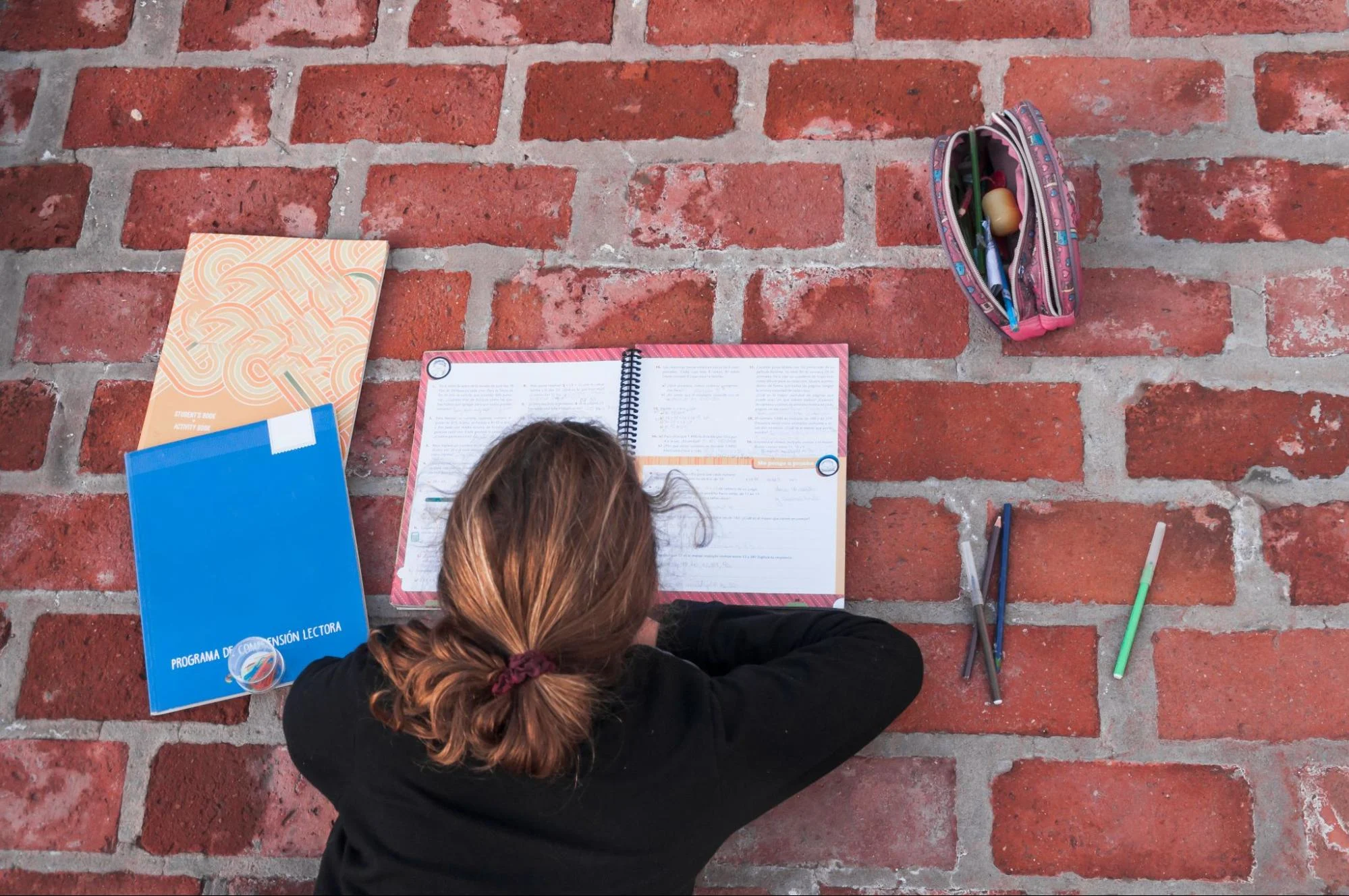
Apps and vocabulary lists are genuinely useful in the early stages: building a base, learning patterns, and getting comfortable with pronunciation. Where they consistently fall short is real-time correction and the pressure of an actual conversation, which is a different skill from recognising a word on a screen.
- A learner can “know” hundreds of words and still freeze mid-sentence, because retrieval under conversational pressure hasn’t been practised.
- Self-study has no mechanism to catch mispronunciation patterns before they become habits.
- There’s no one to push a learner past the words they already know into the ones they’re avoiding.
This is usually where progress stalls, not from a lack of vocabulary, but from never having practised pulling that vocabulary out under real conversational pressure.
Put That Spanish Vocabulary to Work in Real Conversations With Language Learnings
All five methods above share one limitation: you’re still the only person checking your own work. You can’t hear your own pronunciation slipping the way a native speaker can, and you can’t catch yourself avoiding the words you’re shakiest on, because avoiding them feels exactly like normal conversation from the inside.
That’s the piece Language Learnings adds. Lessons are one-on-one with a real teacher, so the words from your study list get used out loud almost immediately, in context, with someone correcting the small stuff before it turns into a habit. There’s no course calendar to wait for and no app streak to keep up, just a person on the other end of the call who notices what you don’t.
Conclusion
Building Spanish vocabulary isn’t about how many words get crammed into a list; it’s about how many of those words can actually be pulled out of memory mid-sentence, under real conversational pressure. Phrases instead of isolated words, active recall instead of passive review, and spaced repetition instead of cramming that combination is what separates vocabulary that sticks from vocabulary that fades by next month.
The words matter less than the method. Get the method right, and the vocabulary takes care of itself. Contact us
FAQs
The most effective method combines learning words in context-rich phrases, active recall practice instead of passive review, and spaced repetition at increasing intervals, rather than memorising isolated word lists.
Roughly 1,000-1,500 high-frequency words cover the large majority of everyday spoken Spanish, making depth on common vocabulary more useful early on than a large but rarely used word list.
Apps are effective for building initial recognition and a daily habit, but most learners plateau without real conversation practice, since apps can’t replicate the retrieval pressure or correction a live conversation provides.
With consistent weekly study using spaced repetition, most learners build a strong conversational base of around 1,000+ words within 3 to 6 months.