


Starting Italian for beginners can feel like standing at the edge of a pool, unsure whether to wade in or just jump. Between rolling verb conjugations, musical pronunciation, and a culture that seems to reward every bit of effort you make, it’s easy to get overwhelmed before you’ve even said “ciao.” At Language Learnings, we work with new Italian students every week, and the ones who make real progress usually aren’t the ones with the most spare time – they’re the ones who started with the right foundation and kept building on it. Here’s what actually matters in those first few months, so you can skip the guesswork.
Why You Should Learn Italian for Beginners First
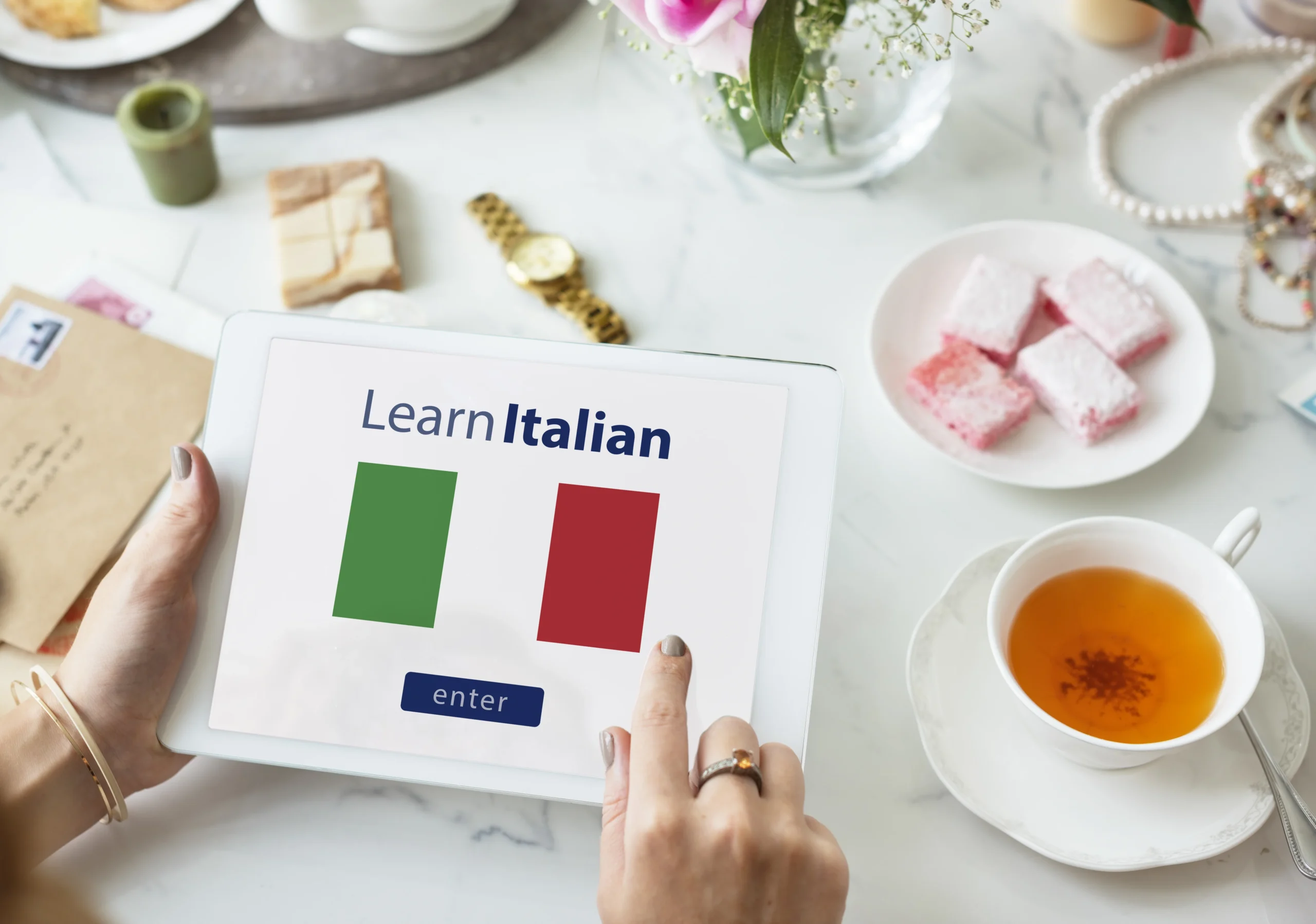
Italian gets a reputation as one of the friendlier languages for English speakers to pick up, and honestly, it’s earned. A huge chunk of its vocabulary traces back to Latin, which English also borrows heavily from, so words feel familiar faster than you’d expect. Its pronunciation sticks to rules that barely bend. And its grammar, while it definitely has personality, rewards people who show up consistently rather than cram once a week.
Then there’s the cultural pull, which shouldn’t be underestimated. Opera, classic cinema, art history, a food culture most people already love before learning a single word – that kind of built-in motivation carries learners through the slow weeks in a way pure practicality never does. Students who genuinely like what they’re studying tend to stick around longer than students chasing a language just because it seemed useful on paper.
Getting Started: What Italian Language for Beginners Actually Looks Like
Before grammar rules and long vocabulary lists enter the picture, it’s worth understanding what those first weeks are really for. You’re not trying to memorize hundreds of words overnight. You’re building small, usable pieces you can eventually string into something resembling real conversation.
For most new students, that means starting with a handful of things: greetings like ciao and buongiorno, numbers and days of the week, simple present-tense conjugations for essere (to be) and avere (to have), and everyday words tied to food, family, and daily routines. Sentence structure comes along with all of it, almost by osmosis, once you’re using the words instead of just staring at them.
None of this has to happen at once, and honestly, it shouldn’t. Spread it across a few weeks and your brain actually holds onto it instead of dumping it the way it would after a single cramming session.
Pronunciation: Italian's Biggest Advantage for New Learners
If beginners get one early win, it’s this. Italian is almost entirely phonetic – words sound the way they’re spelled, with far fewer surprises than English or French throw at you.
A few things worth locking in early: every vowel keeps one sound no matter where it lands (a is always “ah,” i is always “ee”). The letter “c” softens into a “ch” sound before e or i, but hardens into a “k” sound before a, o, or u. Double consonants get held a beat longer than single ones – say “nonno” (grandfather) and “nono” (ninth) out loud back to back and you’ll hear the difference immediately. And stress usually lands on the second-to-last syllable, though there are enough exceptions that it’s worth paying attention as you go rather than assuming.
Get comfortable with these patterns early and everything downstream gets easier, mostly because you stop second-guessing how a new word is supposed to sound the moment you see it.
Essential Grammar Points for Beginner Italian Lessons

Grammar is usually where nerves kick in, but Italian grammar tends to be more logical than intimidating once you break it apart. A handful of concepts show up constantly in beginner Italian lessons, and getting friendly with them early saves a lot of frustration down the road.
Gendered nouns and articles. Every noun in Italian is either masculine or feminine, and the article in front of it shifts accordingly – il libro (the book) is masculine, la casa (the house) is feminine. This trips people up mostly because English doesn’t work this way at all. The fix isn’t memorizing a rulebook first; it’s learning each noun alongside its article from the very start, so gender just becomes part of the word in your head rather than a separate fact you have to recall.
Verb conjugation. Verbs change shape depending on who’s doing the action, and regular ones fall into three fairly predictable patterns based on whether they end in -are, -ere, or -ire. Nail those three patterns early and you can suddenly conjugate a huge share of everyday verbs almost without thinking about it.
Shifting definite articles. Unlike Spanish or French, Italian’s definite articles change depending on the first letter of whatever word comes next – il, lo, l’, i, gli, le. It reads like a headache on paper. In practice, though, it becomes second nature far faster than you’d guess once you start actually hearing it used.
Building Vocabulary That Actually Sticks
There’s a real gap between vocabulary you’ve technically memorized and vocabulary you can actually pull up mid-conversation without freezing. A few habits close that gap faster than brute-force repetition ever will.
Group new words by theme instead of studying them in long, random batches – food words together, travel words together. Use a word in a sentence the moment you learn it, even a clumsy one, rather than just repeating its translation back to yourself. Come back to it the next day, then a few days after that, instead of reviewing it once and assuming it’s locked in. And for words that feel slippery or abstract, tie them to an image or a personal association – it sounds unnecessary until you notice how much longer those words stick.
This is roughly how we structure vocabulary work at Language Learnings for new students, because spaced, contextual practice consistently beats passive memorization
How to Learn Italian Online Without Losing Momentum
Plenty of beginners start strong and fizzle out within a few weeks – not from lack of interest, but because the study routine they picked wasn’t something they could actually sustain. If you’re planning to learn Italian online, a few adjustments tend to make the difference between quitting in March and still going in December.
Set a goal small enough to actually hit – fifteen focused minutes a day will outperform an ambitious hour you only manage once a week. Mix in passive exposure like Italian music, shows, or podcasts alongside active study like flashcards or writing practice. Speak out loud regularly, even if it’s just narrating your own day to an empty room. Keep some kind of loose record of progress, whether that’s a vocabulary log or simply noticing what clicked today that didn’t a month ago. And check in with a tutor now and then, even occasionally, since self-study alone rarely catches the mistakes that quietly turn into habits.
Online learning hands you flexibility a classroom can’t always offer. That flexibility only pays off, though, if you actually use it week after week.
Why Working With a Tutor Speeds Things Up
Self-study takes you pretty far, but there’s a ceiling to it. A tutor hears pronunciation habits you genuinely can’t catch in yourself, corrects grammar before a mistake calcifies into muscle memory, and – maybe the biggest thing – gives you an actual reason to speak out loud instead of quietly reading about the language from the sidelines.
At Language Learnings, our beginner Italian lessons are built specifically around that gap. Lessons follow your pace and interests instead of a fixed syllabus, so time goes toward the grammar and vocabulary that actually matters for how you plan to use the language, whether that’s an upcoming trip, a family connection, or just the pleasure of learning it.
Common Beginner Mistakes Worth Avoiding
A handful of patterns show up again and again with new students, and knowing them ahead of time saves a fair amount of frustration. Skipping pronunciation practice early tends to backfire later, once bad habits are harder to unlearn than they would’ve been to avoid in the first place. Memorizing vocabulary without ever putting it into a sentence leaves words floating uselessly in short-term memory. Avoiding speaking out of fear of sounding wrong slows everything down – mistakes are part of how the language actually sinks in. Leaning on a single app instead of mixing listening, speaking, reading, and writing tends to create lopsided progress. And expecting fluency on a tight timeline usually just leads to discouragement when the pace feels slower than hoped.
Learning any language is a long game, Italian included. The students who end up fluent aren’t necessarily the fastest learners – they’re the ones who kept showing up on the slow weeks too.
Final Thoughts
Italian for beginners doesn’t have to feel like a mountain once you know what actually matters early on: steady pronunciation practice, a small set of core grammar patterns, vocabulary you use rather than just memorize, and a routine you can realistically keep up with. Whether you’re teaching yourself or working alongside a tutor, the goal at the start was never perfection – it’s laying down a foundation you can keep building on for years.
If you’re ready to start learning Italian for beginners with actual structure behind it, Language Learnings can help you get that foundation right from day one.Contact us.
FAQs
It varies a lot, but six months to a year of steady effort usually gets people to a point where they can hold a basic conversation. The biggest factor isn’t talent – it’s whether you’re actually speaking each week or just reviewing flashcards.
Honestly, both have their place. Online tends to win on flexibility and cost, especially if a tutor isn’t local to you. In-person classes bring a kind of built-in accountability that’s harder to fake for yourself at home.
Skip the giant word lists. Learn a small batch of related words – say, everything you’d need to order food – then actually use them in a sentence that day. Words you’ve used stick around far longer than words you’ve only read.
No, and waiting for that usually backfires. Most people pick up grammar faster by talking, messing up, and getting corrected than by trying to master rules silently before opening their mouth.
Definitely, particularly for pronunciation. Apps are fine for drilling vocabulary, but they can’t hear you the way a tutor can, and a lot of small pronunciation errors go unnoticed until someone points them out in real time.
Attach it to something you actually care about – a trip you’re planning, a grandparent’s language, a movie you want to watch without subtitles. That kind of motivation tends to outlast anything built purely on “it’ll be useful someday.”